
Online pokies, unpacked
Reels, symbols and a random number generator sit behind every online pokie you'll ever see. This guide walks through what's actually happening under the bonnet, what RTP and volatility really mean, and how to keep a level head while you play.
What is an online pokie, exactly?
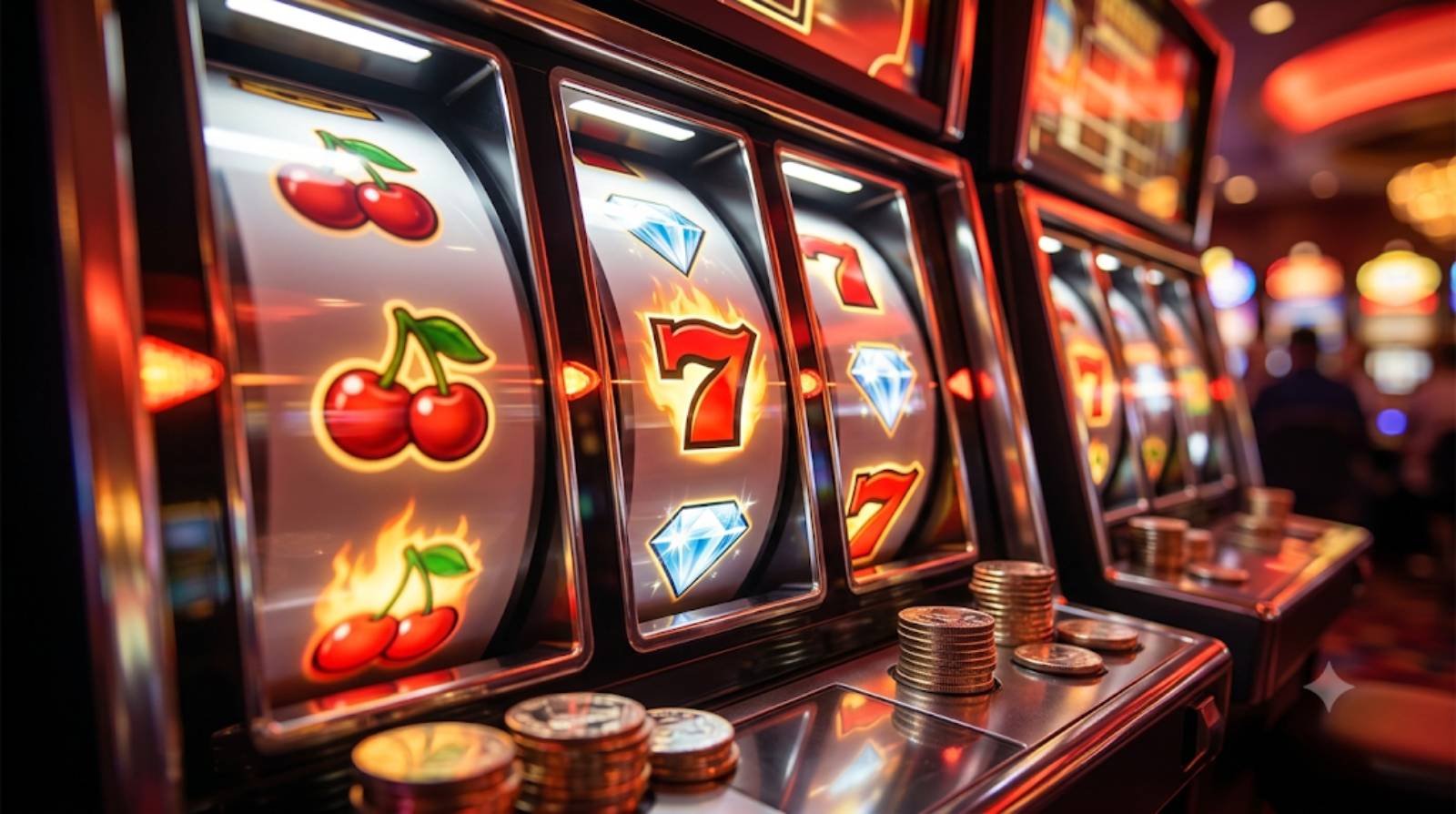
"Pokies" is the word Australians use for what much of the world calls slot machines, and the online version is simply that same idea rebuilt as software. Instead of a mechanical or electromechanical cabinet with spinning physical reels, an online pokie renders its reels, symbols and animations on a screen, while a piece of code decides what actually lands. The visual theme can be anything from ancient Egypt to a suburban fish and chip shop, but structurally almost every online pokie shares the same bones: a grid of reels, a set of symbols, a table of payouts, and rules for how matching symbols combine into a win.
What separates one game from another is rarely the artwork. It's the maths sitting behind it: how often symbols appear, how paylines are counted, what the top prize looks like, and how the whole system is tuned to pay back a certain proportion of money wagered over the long run. Understanding that maths, even loosely, changes how you read a game far more than knowing its theme ever will.
Where pokies came from: a short history
The lineage of the pokie stretches back more than a century, to coin-operated machines with physical reels, a lever, and a handful of mechanical stops that decided the result. Australia has an unusually deep relationship with the format: poker machines have been part of licensed clubs and hotels here since the 1950s, and the country has long had one of the highest concentrations of gaming machines per person anywhere in the world. That domestic history is worth knowing because it shaped the vocabulary, "pokies", that Australians still use today, even when the machine in question is a website rather than a cabinet in a club.
The shift online followed the broader migration of gambling to the internet through the late 1990s and 2000s, as reel mechanics that had been physical for decades were rewritten as software. Early online versions were fairly literal translations of land-based machines: three reels, a handful of symbols, one payline. Over time, developers used the flexibility of code to add reels, paylines, cascading symbols, bonus rounds and increasingly elaborate features that would have been impossible to build mechanically. The core idea (a randomised outcome tied to a payout table) never changed. Only the packaging did.
RNG: the engine behind every spin
At the centre of every legitimate online pokie sits a random number generator, or RNG. This is a piece of software that continuously generates strings of numbers with no predictable pattern, at a rate of many thousands per second, even when nobody is playing. The moment you press spin, the RNG's current output is mapped onto the reels to decide exactly what symbols appear and where.
Two things follow from this that are worth sitting with. First, each spin is statistically independent of the one before it: the RNG has no memory, so a machine that hasn't paid out for an hour is not "due" a win, and a game that just paid a jackpot is no more or less likely to pay again on the very next spin. Second, because the outcome is generated before you have any way to react to it, there is no timing, rhythm or technique that changes the odds. Stories about tapping the spin button a certain way, or stopping reels manually to influence the result, describe an idea that simply doesn't match how the software behind these games works.
RTP and volatility, unpacked
RTP stands for return to player, usually expressed as a percentage. Most online pokies sit somewhere in the 94–97% RTP range, though the exact figure is set by the game's designer and some titles fall outside that band in either direction. A pokie advertised with a 96% RTP is, in theory, designed to return $96 for every $100 wagered through it, but only as an average calculated across an enormous number of spins, often tens of millions, during the game's design and testing. It says nothing about what will happen across a ten-minute session, an afternoon, or even a full year of occasional play. Treat it as a description of the game's long-run design, not a forecast for your night. My advice: if a site won't publish a game's RTP at all, take that as a sign to go looking for one that will.
Volatility, sometimes called variance, describes the shape of that long-run outcome rather than its size. A low-volatility pokie tends to pay out often, in smaller amounts, producing a smoother, more predictable session. A high-volatility pokie pays out less frequently, but individual wins can be considerably larger when they land, which produces a bumpier ride with longer dry stretches punctuated by bigger swings. Two games can carry an almost identical RTP while feeling completely different to play, purely because of how their volatility is tuned.
| Concept | What it measures | What it doesn't tell you |
|---|---|---|
| RTP | Theoretical long-run average payback, calculated over millions of spins | What will happen in any single session |
| Volatility | How often wins land and how large they tend to be when they do | Whether you personally will win or lose overall |
| Hit frequency | How often a spin produces any payout at all, big or small | The size of those payouts |
How a single spin actually works
It helps to walk through the sequence behind a single spin from start to finish. You set your bet size and press spin. Behind the scenes, the RNG's current value is captured at that instant and translated into a specific position for each reel. The game's software then arranges the corresponding symbols on the visible grid and checks every active payline or way-to-win against the paytable to see whether any combination qualifies for a payout.
If a winning combination is found, the game calculates the payout based on your bet size and the paytable, and may trigger secondary sequences (a bonus round, free spins, or a gamble feature) depending on which symbols landed. The spinning reels you watch on screen are, in effect, an animation layered over a result that has already been determined; the visual delay exists for entertainment and pacing, not because the outcome is still being decided while the reels appear to move.
None of this differs meaningfully between a three-reel classic and a modern, feature-heavy video pokie. The dressing changes (more reels, more symbols, more bonus triggers), but the underlying sequence of bet, RNG result, symbol placement and paytable check stays the same.
Paylines, reels and bonus features
A payline is simply a defined pattern across the reels that the game checks for matching symbols: traditionally a straight line through the middle, but modern pokies often use zigzags, V-shapes, or dispense with fixed lines altogether in favour of "ways to win," where matching symbols pay regardless of their exact position as long as they're adjacent across reels. Some games use cluster-pay systems instead, rewarding groups of touching symbols anywhere on the grid rather than lines at all.
Reel count varies too. Classic three-reel designs echo the earliest mechanical machines, while five-reel and even six or seven-reel formats are now common, allowing for hundreds or even tens of thousands of ways to win on a single spin. Layered on top of the base reels, bonus features add further texture: wild symbols that substitute for others, scatter symbols that trigger free spins regardless of payline position, multipliers that scale up a win, cascading or "tumbling" reels where winning symbols disappear and new ones drop in, and standalone bonus games with their own mechanics. Each of these features is itself governed by the same RNG logic: a wild landing, a free spin triggering, a multiplier applying, are all predetermined outcomes rather than separate strokes of luck layered on afterwards.
Free play versus real-money play
Many online pokies are offered in a free or "demo" mode that uses play credits rather than real funds. This can be a genuinely useful way to get a feel for a game's pace, symbol set and bonus triggers before deciding whether it's something you'd want to play at all. Treat it the same way you'd treat a trial version of any piece of software.
It's worth being clear-eyed about the differences, though. Demo credits typically reset and carry no consequence if they run out, which changes the psychology of play: most people behave differently when nothing is actually at stake. A string of demo wins or losses also says nothing about what a real-money session will look like, since it's simply a separate set of independent RNG outcomes. If you do choose to move from free to real-money play, it's worth doing so deliberately, with a budget decided in advance rather than as a reaction to how a demo session went.
Common pokie myths, debunked
A handful of ideas about pokies persist despite not holding up against how the software actually works. Addressing them directly is more useful than gesturing vaguely at "the house always wins."
- "A machine is due for a win after a long losing run." An RNG has no memory of previous spins, so there's no sense in which a game owes a payout because of what happened before.
- "Playing at a certain time of day changes your odds." RNG outcomes aren't tied to the clock, day of the week, or how busy a site is at that moment.
- "Stopping the reels manually changes the result." The outcome is set the instant you press spin; any reel-stop animation is cosmetic.
- "Higher bets always unlock better odds." Bet size changes what's at stake, not the underlying probability of the RNG result, though some games do scale certain bonus features with stake.
- "A hot streak means the game has changed its payout settings." Streaks, hot or cold, are exactly what you'd expect from ordinary random variation over a small sample of spins.
The legal backdrop for Australian players
It's worth understanding the legal setting these games sit in, since it differs from a lot of other online entertainment. Under the Interactive Gambling Act 2001, it's the businesses that provide or advertise online casino games, including pokies, to people in Australia that are acting unlawfully, not the individual who chooses to play. In practice, this means most online pokies reachable from an Australian internet connection are hosted by operators based offshore, outside the reach of Australian licensing, dispute resolution and consumer protection frameworks. The Australian Communications and Media Authority (ACMA) is the regulator tasked with enforcing the Act and can take action against illegal offshore services, including blocking access to some of them.
This offshore reality matters well beyond the legal technicalities. It shapes what protections exist if something goes wrong, how disputes get resolved, and what verification standards a site actually meets. Our full explainer on the legal position walks through the Interactive Gambling Act and ACMA's role in far more depth, and our payments guide covers how money moves in and out of these offshore platforms. My own take: a pokie's odds are the same whether the operator is licensed or not, but everything around the odds, the payout and the dispute if something goes wrong, is not. That surrounding layer is what you're actually trusting a site with.
Playing pokies responsibly
Because pokies are built around rapid, repeated small decisions, it's easy for a session to run longer or cost more than intended without that being obvious in the moment. Deciding on a time and money budget before you start, and treating both as firm rather than flexible, is one of the simplest ways to keep a session in proportion. It also helps to notice when play stops feeling like entertainment and starts feeling like an attempt to recover losses. That shift is one of the clearer warning signs worth taking seriously.
Our safe and responsible play guide goes through practical limit-setting, the warning signs of harmful play, and where to find support, including Gambling Help Online, which is free, confidential and available 24/7 on 1800 858 858. Gambling of any kind is an 18+ activity and can cause real harm, so treating it as entertainment with a firm ceiling, rather than a strategy for making money, is the healthiest frame to start from.
FAQ
Are online pokies the same as the pokies in a pub or club?
They share the same DNA (reels, symbols and paylines governed by a random number generator), but an online pokie runs as software on a server rather than inside a physical cabinet. The maths behind the reels works the same way in principle, though individual games differ enormously in RTP, volatility and features.
What does RTP actually tell me?
RTP, or return to player, is a theoretical long-run average calculated over many millions of spins by the game's maths model. It is not a promise about any single session, and it says nothing about whether a particular spin will win or lose.
Can a player predict or influence the outcome of a spin?
No. A properly built RNG produces outcomes that are independent of previous spins and cannot be reasoned out through timing, patterns, or so-called systems. Betting size changes the stakes involved, not the underlying odds of the game.
Is playing pokies for free useful, or just a marketing trick?
Free-play or demo modes can genuinely help you learn a game's pace, symbols and bonus triggers without risking money. Just remember that demo credits behave differently to real funds psychologically, and demo results say nothing about what a real-money session will bring.
Are online pokies legal for someone in Australia to play?
The Interactive Gambling Act 2001 targets the businesses that provide or advertise these games to Australians, not the individual who plays. In practice, most online pokies reaching Australian players come from offshore operators sitting outside Australian licensing and consumer protection.
Does a higher volatility game mean bigger wins overall?
Volatility describes the shape of the ride, not the destination. A high-volatility pokie pays less often but can deliver larger individual wins, while a low-volatility game pays more frequently in smaller amounts. The long-run RTP can be similar either way.